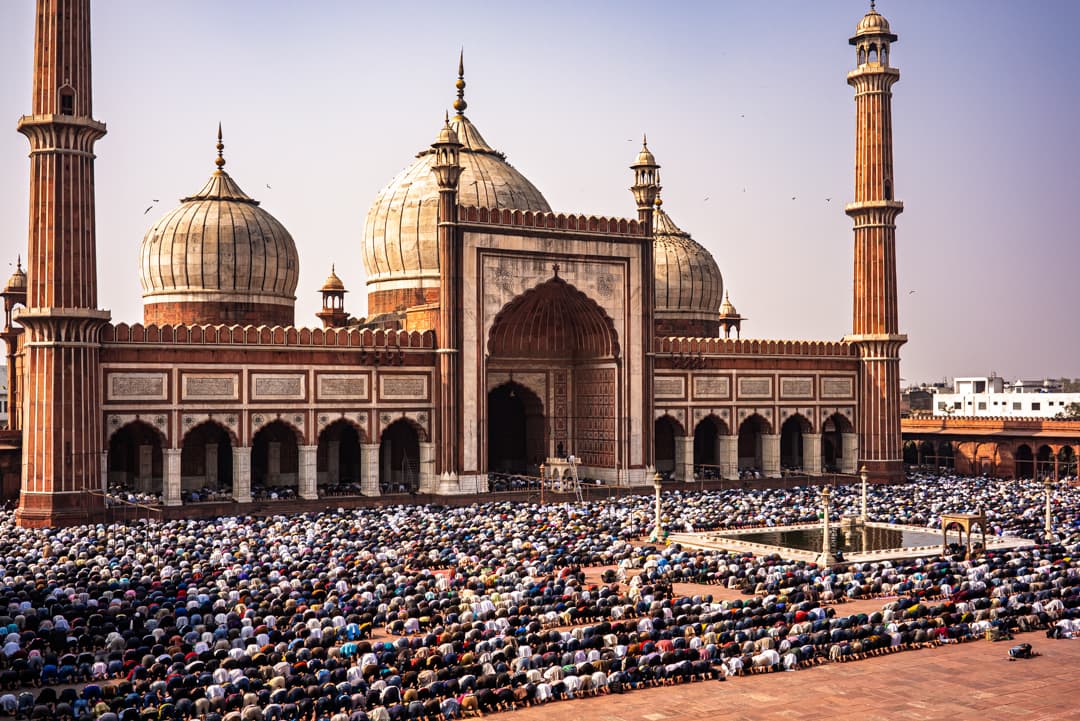
You climb to the Jama Masjid before you ever enter it. The eastern steps rise from the chaos of Meena Bazaar — rickshaw bells, frying oil, a man selling single cigarettes — and deposit you, a little breathless, at the largest mosque in India, built by the same emperor who built the Taj. The boys on the steps have seen a thousand visitors arrive this way. They are unimpressed, and they are right to be.
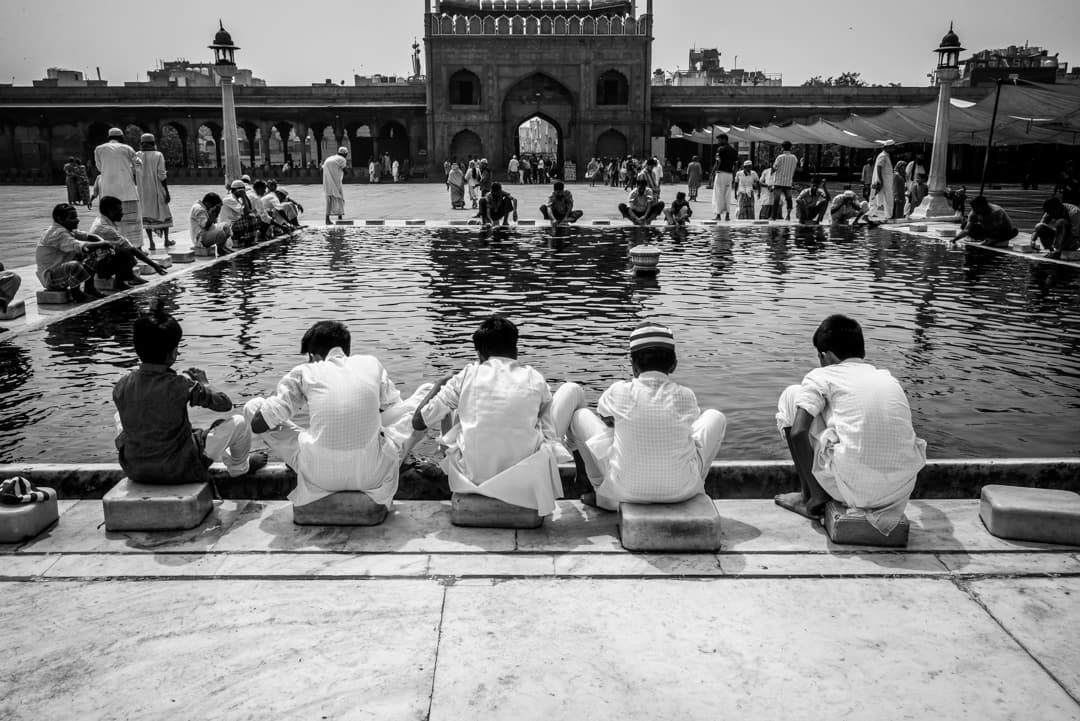
Inside, the courtyard opens like a held breath. Twenty-five thousand can pray here at once; on an ordinary Tuesday it holds a few hundred, and the emptiness is its own kind of grandeur. An old man at the ablution tank washed his feet with the unhurried care of someone who has done this every day for sixty years, and did not once look up. The marble was warm underfoot. Pigeons negotiated the arcades. Nobody was in a hurry, which in Old Delhi is close to a miracle.
What I keep returning to is not the architecture but the ordinariness laid over it — a cat asleep on the prayer-mat stripes, two women on their phones in a carved niche older than their grandmothers' grandmothers, boys daring each other into the cold water of the tank. A sacred place is also, always, just a place where people pass their afternoons.
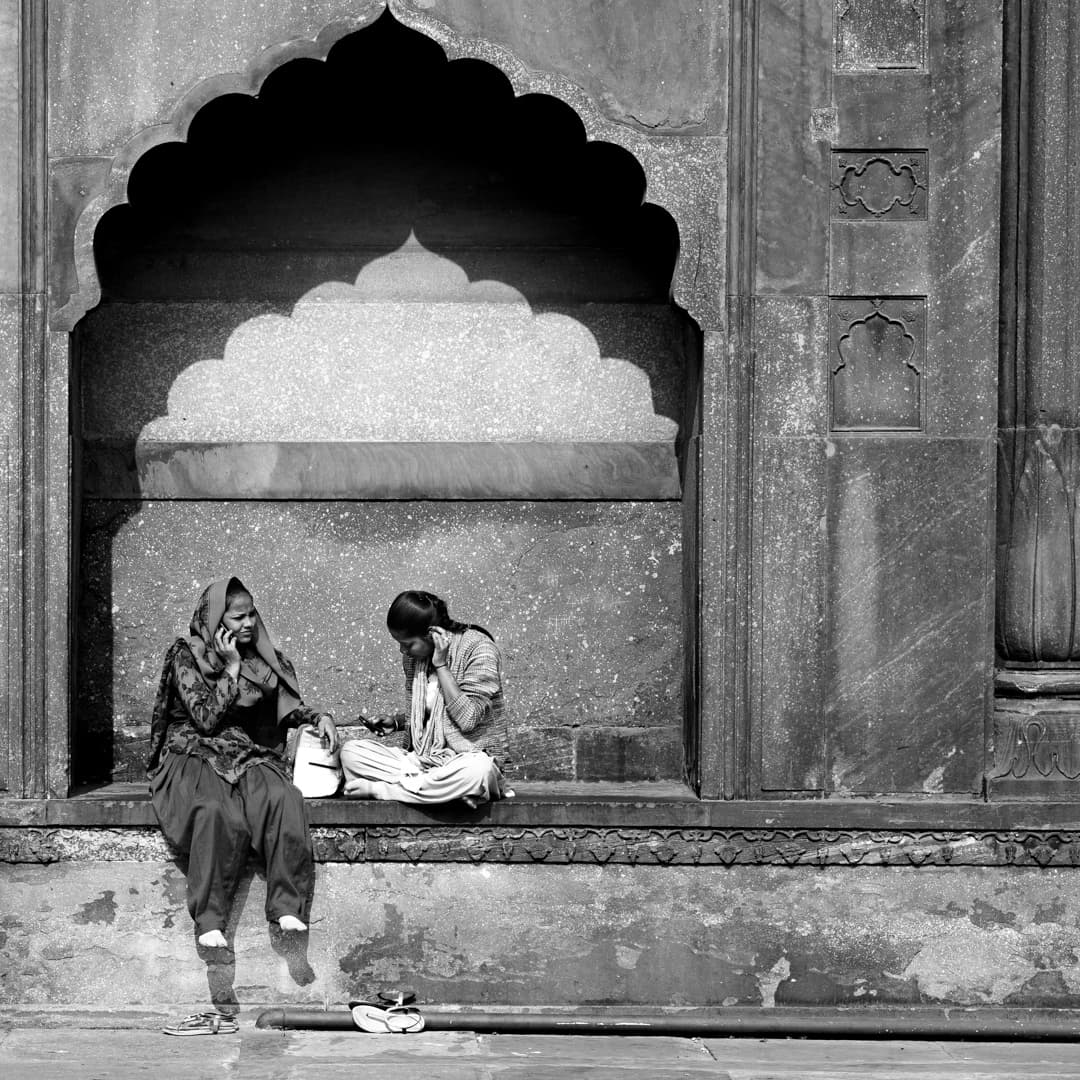
Near the southern wall I watched two women count the morning's coins onto the red sandstone, heads bent together over the small arithmetic of a day. A few steps below, a young mother carried her daughter up toward the gate, the child wrapped against a December that hadn't yet decided to be cold. Neither scene was arranged for me. Both were gone within a minute.
Then there is Eid, when the courtyard fills completely and the city seems to pour itself into a single shape. Twenty thousand people bowing in the same instant make a sound you feel more than hear — a long, soft exhalation, and then silence. I have photographed many things. I have never photographed anything that made me feel smaller, or more glad to be small.